


 Boiler Bay Beacon

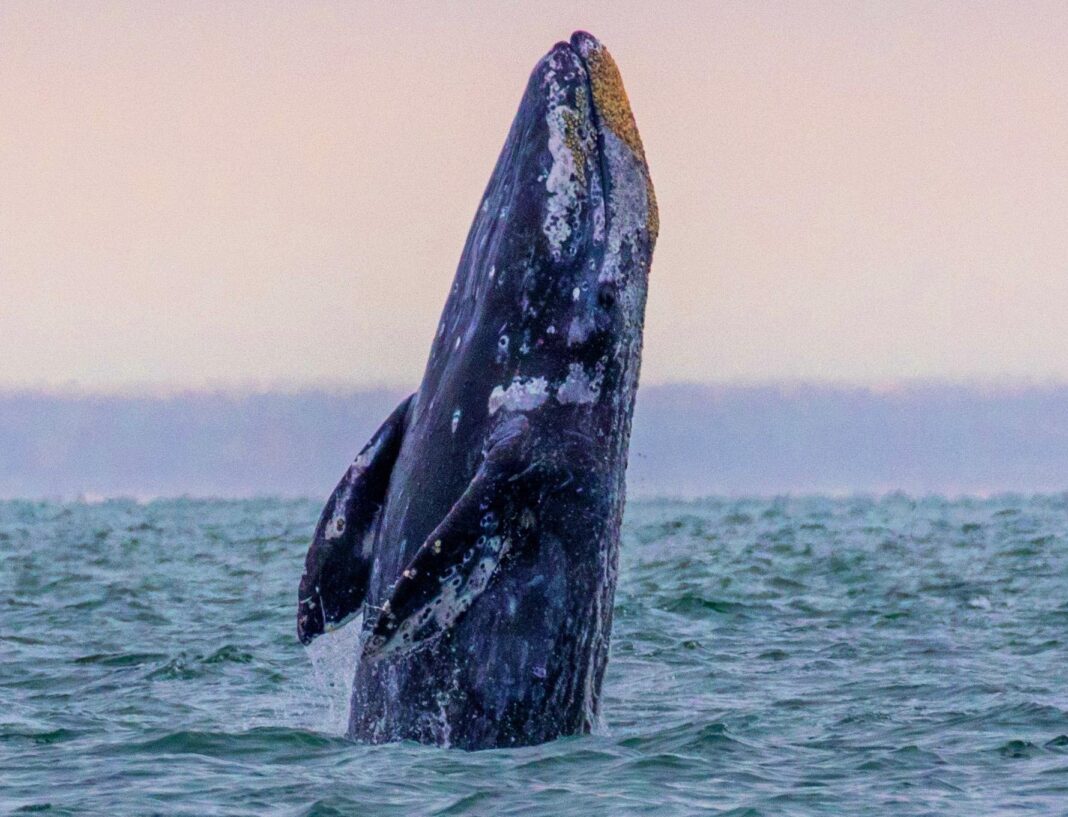
DEPOE BAY — Gray whales weren’t the only creatures migrating to Oregon’s central coast as thousands of humans arrived for winter Whale Watch Week.
Instead of seeing the usual non-stop procession of 20,000 whales, however, they were eyewitnesses to the shocking decline of one of nature’s most amazing creatures. As of 2025, government scientists reported that Eastern North Pacific gray whales — in the midst of a winter migration from Alaska feeding grounds to calving lagoons near Baja, Mexico — face an uncertain future.
The bleak news came after a brief period of jubilation in 2023 when it looked like the gray whale population was rebounding and the National Oceanic and Atmospheric Administration (NOAA) announced an end to an Unusual Mortality Event. The reversal has plunged whale numbers to about 13,000 along the West Coast — the lowest since the 1970s.
The latest data for the 2024/2025 season indicates:
Lowest Abundance in Decades: Population estimates range from 11,700 to 14,450, the lowest in over 50 years. This represents a nearly fifty percent drop from its peak of roughly 27,000 whales in 2016.
Record Low Reproduction: Only about 85 calves were estimated to have been produced in 2025, the lowest number since record-keeping began in 1994.
Failed Rebound: While a 2023/2024 estimate briefly suggested numbers might be recovering, the 2025 count confirmed the downward trend is persisting.
Root Causes: NOAA scientists mainly blame changes in Arctic feeding grounds, where warming oceans and loss of sea ice have reduced the availability of prey and led to widespread malnutrition, increased mortality, and reduced birth rates. But they also factor in the polluted waters of Baja California, and chemical contaminants and heavy metals that accumulate near urban and industrial centers in both the U.S. and Mexico. Millions of gallons of untreated sewage, industrial waste, and runoff containing heavy metals (like mercury and lead), pesticides, and other chemicals also flow into coastal waters via rivers like the Tijuana River. Scientists also discovered that gray whales filtering seawater for food can involuntarily ingest plastics and other marine debris, which can cause internal injury or false feelings of satiation, contributing to malnutrition.
Local Oregon Impacts: In 2025, dead gray whales continued to wash ashore on the West Coast, with 47 strandings recorded as of mid-year, up from previous years. State agencies note that while roughly 18,000 or more whales typically migrate past Oregon, the number of visible mother-calf pairs has become “rare.”
Blows to the economy: With millions of dollars at stake, Oregon’s charter-boat industry could also severely impacted at ports along the coast. For example, some experts estimate that 30,000 or more people paid about $25 each to ride whale-watching boats out of Depoe Bay last year, worth about $750,000 to the local marine economy. Thousands more take in a state-run Whale Watch Center and a local whale museum. These visitors spend money not just on tours, but also on hotels, dining and shopping, stimulating cashboxes throughout the city with ripple effect.
Dr. Bruce Mate, Director Emeritus of the OSU Marine Mammal Institute described the fundamental role gray whales play in Oregon.
“They’re Oregon’s flagship large whale, really easy to emote with,” Dr. Mate reflected. “Gray whales are the canaries in the coal mine. Though we exist as separate species, our fates are intertwined.”
Marine biologists have urged international conservation bodies to reassess the species’ status. A petition was filed in September 2025 to relist the population under the Endangered Species Act, but no decision has yet been made.


