


 Boiler Bay Beacon


LINCOLN CITY, Ore. — Bitcoin, Ethereum, Dogecoin—oh my! Cryptocurrency is the talk of the tech world, but for coastal communities like ours, is it a treasure chest or a shipwreck waiting to happen? As fishing boats bob in Depoe Bay and tourists flock to our shores, locals are wondering if digital currencies could change the economic tides.
Cryptocurrency, a form of digital money secured by cryptography, operates without banks or governments. It’s like cash for the internet age, but instead of dollar bills, you’ve got strings of code stored in a digital wallet. For coastal towns, where small businesses thrive on tourist dollars, crypto could be a game-changer—or a headache.
A 2025 survey by the National Cryptocurrency Association and The Harris Poll found 21% of American adults, roughly 55 million people, own crypto, and that ownership skews younger and male. Rural and coastal areas, however, lag behind, citing confusion and risk.
The upside? Crypto could attract tech-savvy tourists. Imagine a surfer paying for fish tacos with any crypto of their choice at a Lincoln City food truck. Blockchain, the tech behind crypto, ensures secure transactions, which could appeal to businesses who are sick of credit card fees. Plus, decentralized finance (DeFi) platforms let users lend or borrow without middlemen, potentially helping fishermen fund new boats for around two percent interest.
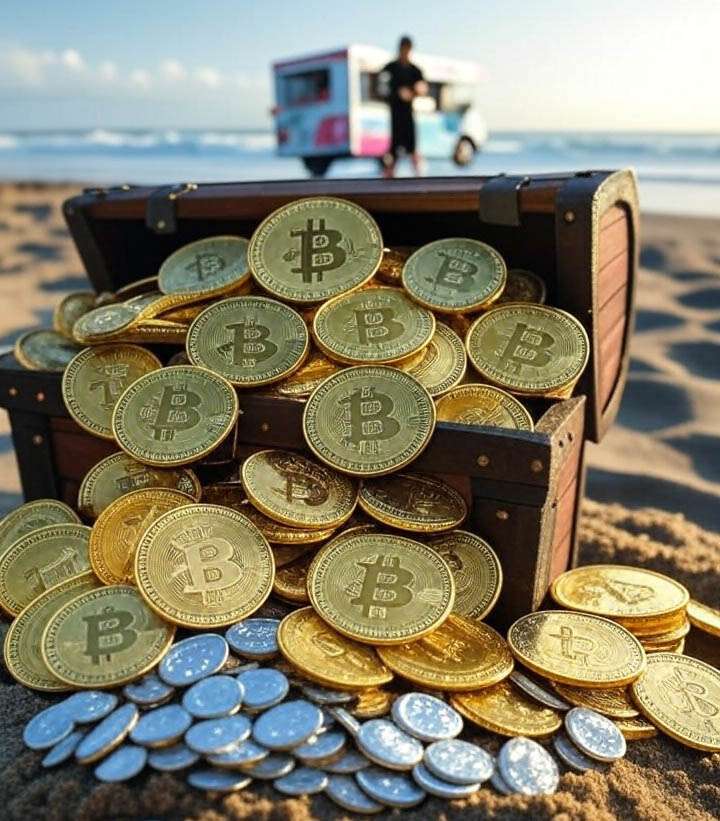
Even better, the U.S. government is diving headfirst into blockchain adoption, signaling crypto’s role as the future of money. In a landmark move this August, the U.S. Department of Commerce partnered with Chainlink and Pyth Network to publish key macroeconomic data—like real gross domestic product (GDP), personal consumption expenditures (PCE) price index, and real final sales to private domestic purchasers—directly on-chain across nine blockchains, including Bitcoin, Ethereum, Solana, and Avalanche. This initiative, the first of its kind for a federal agency, makes official economic indicators immutable and globally accessible, boosting transparency for everything from DeFi protocols to prediction markets. As Commerce Secretary Howard Lutnick put it,
“We are making America’s economic truth immutable and globally accessible like never before, cementing our role as the blockchain capital of the world.”
With the Trump administration’s pro-crypto push—including the GENIUS Act for stablecoins—this on-chain data revolution could unlock automated trading strategies, tokenized assets, and real-time economic dashboards, paving the way for crypto to power everyday finance from coast to coast.
So yes, you are still early.
But beware the riptide. Crypto’s value swings like a buoy in a storm—Bitcoin dropped below $109,000 in late August, testing two-month lows amid whale sell-offs and liquidations. Scams are rampant, too. The Federal Trade Commission reported $1.42 billion in cryptocurrency fraud losses in 2024, part of a broader $12.5 billion surge in total scam losses. For coastal residents, who often rely on tight budgets, a bad crypto bet could be as disastrous as a nor’easter so being informed is your best bet.
Tips for Coastal Crypto Newbies
- Start small: Invest only what you can afford to lose.
- Use reputable exchanges like Coinbase and Osmosis.
- Watch for phishing scams—never share your digital wallet’s private key. If you get an email or text saying it’s from Coinbase and someone has bought thousands of dollars and they need you to click a button to fight it, it’s a phishing attempt. Mark it as spam.
- Research before diving in. That “DogeKingMoonCoin” might not be your ticket to riches. Stick to majors with a good track record like Bitcoin, Ethereum and Atom as you start out.
- Find out for yourself how easy a crypto is to use and how much the transaction fees cost. Bitcoin and Ethereum cost a lot to transact, where newer projects like Atom, Avalanche, and many others cost pennies to send money anywhere on the globe.
- An exciting project that aims to connect all cryptos is Polaris. There a user can swap virtually any crypto with any other crypto and it appears to be the future. It’s in beta right now and the team behind it is well respected and has a proven track record (they created Osmosis).
As the Oregon Coast’s economy navigates choppy waters, crypto could be a lifeline. With government backing turning blockchain into a pillar of economic transparency, it’s clear digital dollars are here to stay—harnessing the power of the tide for a brighter, more secure financial future.


