


 Boiler Bay Beacon

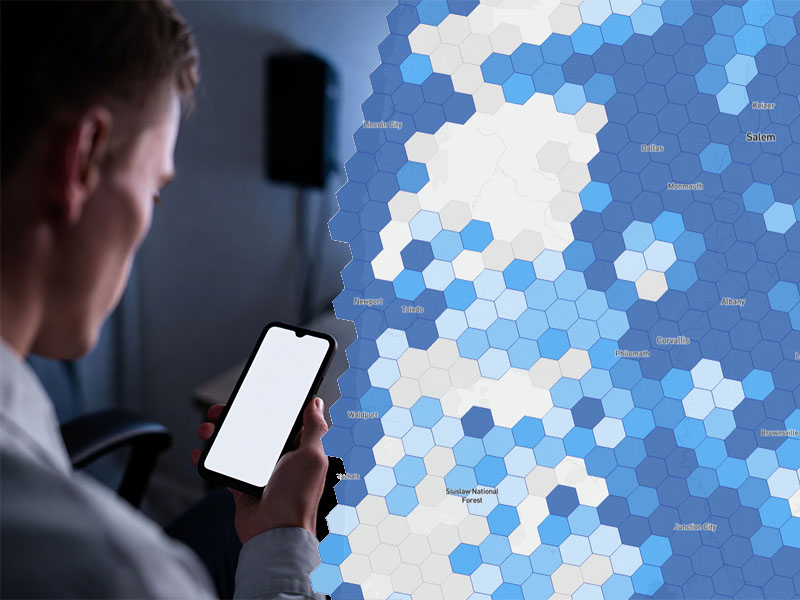
Limited competition among internet providers leaves most of Lincoln County dependent on one or two options, as high infrastructure costs in sparse, rugged coastal terrain block new entrants and sustain uneven service.
Spectrum dominates coverage, reaching approximately 74.9% of locations countywide and up to 85.8% in Lincoln City. Astound Broadband serves 28.1–39.2% with cable and limited fiber, while CenturyLink reaches about 73.2% primarily via legacy DSL technology with average speeds around 20 Mbps—making it less viable for modern high-bandwidth needs despite the broad footprint. Satellite services like Starlink and Viasat cover nearly 100% of even the most remote areas.
In rural zones such as Otis, Siletz, and inland stretches, fixed broadband access drops to 40–60% for reliable 100 Mbps or better service. Many residents rely on satellite or fixed wireless as a result.
Upload performance remains the most significant barrier. Spectrum’s Internet Premier plan advertises 500 Mbps download but limits upload to roughly 20 Mbps due to cable network architecture. Real-world wired tests typically show 10–20 Mbps upload, often around 16–20 Mbps, equating to about 2 MB/s for file transfers.
These constraints directly impact remote work and content creation. Video calls on Zoom or Teams require sustained upload for clear performance: basic group calls need 0.6 Mbps, 720p HD needs 1.8–2.6 Mbps, and 1080p needs 3–3.8 Mbps. Screen sharing or multiple participants increases demand, with 5–10 Mbps upload providing a reliable buffer against lag and freezing. At 16–20 Mbps calls generally function under ideal conditions, but peak-hour congestion and Wi-Fi interference frequently cause disruptions.
Uploading videos or large files faces comparable limits. A 10-minute 1080p clip requires 5–10 Mbps sustained upload for reasonable transfer times of 10–20 minutes. 4K content demands 20–50 Mbps or more, often resulting in hours-long waits on capped plans. Live streaming follows similar requirements: 10–15 Mbps for 1080p and 25 Mbps or higher for 4K.
Nationally, rural areas experience the same pattern. About 22.3% of rural U.S. residents lack fixed terrestrial broadband at the FCC’s minimum 25/3 Mbps standard, compared with 1.5% in urban areas. Limited competition correlates with higher prices and asymmetric speeds that prioritize downloads over uploads.
Federal and state funding programs seek to address these disparities. Oregon’s Broadband Equity, Access, and Deployment (BEAD) program, approved in early 2026, allocates $689 million statewide for fiber-priority projects across 36 counties, including Lincoln. The initiative targets unserved and underserved locations with symmetrical speeds, with most construction scheduled to begin late 2026.
Earlier American Rescue Plan Act Capital Projects Fund grants include $3.36 million awarded to the Confederated Tribes of the Siletz Indians to deliver 100/100 Mbps service to 81 unserved locations in Lincoln County by December 2026.
Residents can check availability through the FCC National Broadband Map or Oregon Broadband Office resources. Low-income households may qualify for discounts via Oregon Lifeline.


