


 Boiler Bay Beacon

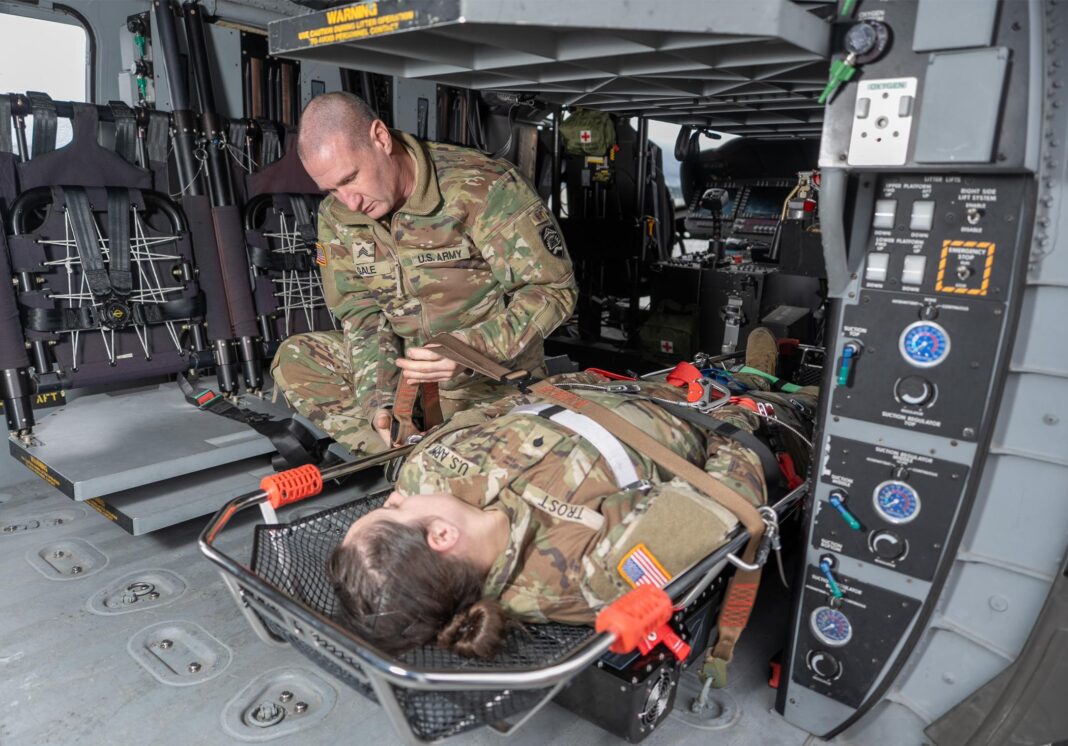
SALEM — Sharp-eyed aircrews from the Oregon Army National Guard spotted a snag with new rescue tech on the Salem flight line. They fixed it themselves. Now every MEDEVAC unit in the Army uses their redesigned strap.
The innovation is a redesigned litter strap designated SK-1189-V and named for Golf Company, 1st Battalion, 189th Aviation Regiment. Certified airworthy by the U.S. Army Aeromedical Research Laboratory, the strap became standard equipment across the Army after just six months from problem identification to rollout.
It all started during training on June 18, 2025, when Oregon’s unit became only the third in the Army to receive the Vita Vertical Rescue System, known as VRS. This advanced hoist stabilization technology uses four fans and air pressure to eliminate dangerous spinning in rescue baskets, doing away with the old taglines crews once used in gusty conditions.
But there was a problem. The Black Hawk’s standard seat belts were too short to secure a litter loaded with the VRS device attached to the bottom. High hoists over 280 feet posed risks, since taglines typically max out at 300 feet, leading to potential delays and danger.
Chief Warrant Officer 4 Josiah Zeiner, aviation safety officer with 2nd Battalion, 641st Aviation Regiment, recalled the key moment: “We realized this great device still needed refining.”
Crew chief Sgt. James Gale, a heavy equipment technician with ODOT in his civilian job, suggested the fix: longer straps with Cobra buckles for quick connects, plus direct floor attachment via D-rings. The team collaborated with rescue equipment manufacturer Skedco, started with an existing model SK-958, lengthened it, added features, built prototypes, tested them rigorously, and sent samples to Fort Rucker for evaluation.
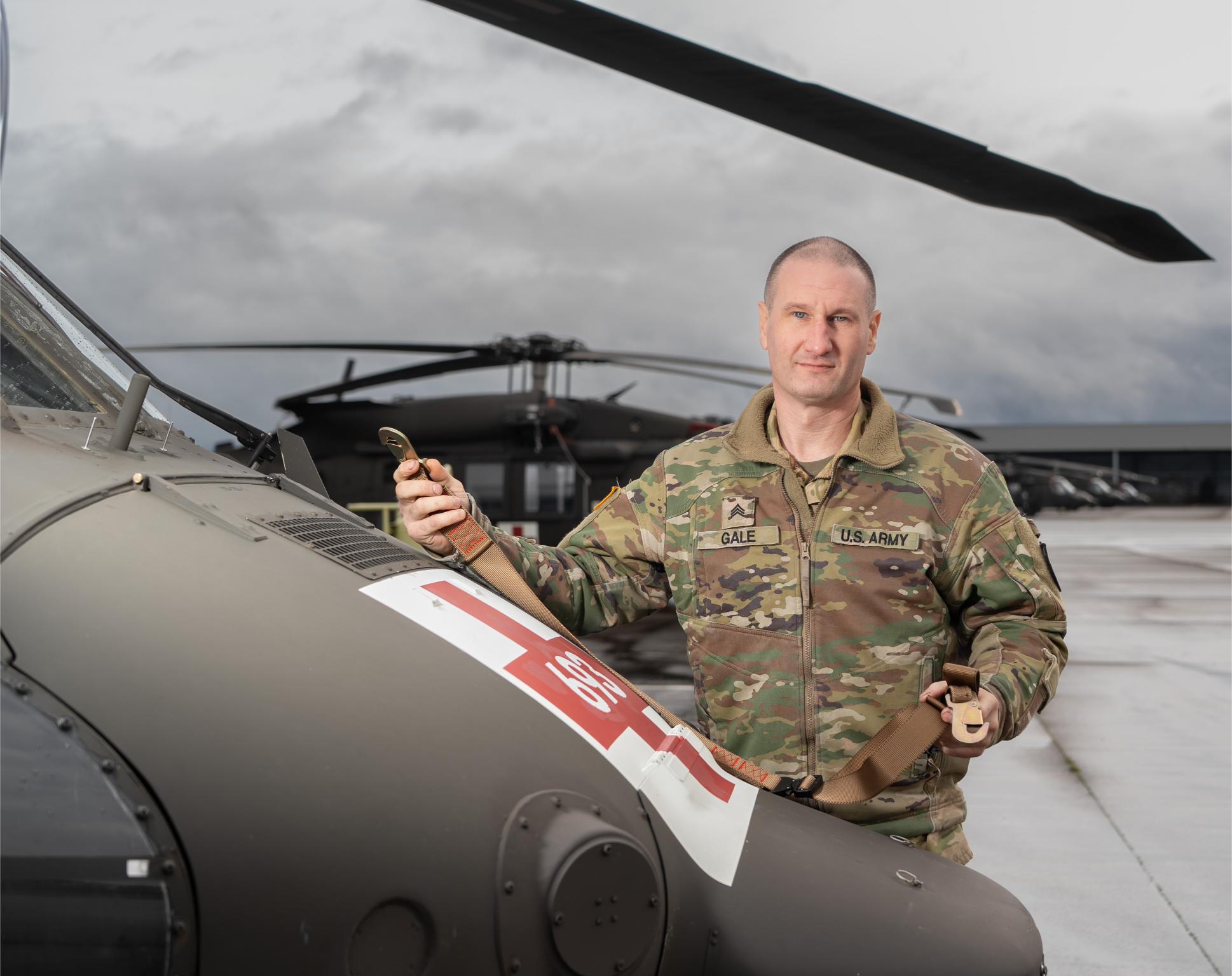
(U.S. Army photo by Maj. W. Chris Clyne, Oregon National Guard Public Affairs)
The final design centers the Cobra buckle over the patient and works with two different Black Hawk floor configurations. It cuts the time needed to secure and release patients, which matters when every second counts in a medevac.
“We’ve never had a litter spin out of control in the Oregon Guard,” Zeiner said. But the new system opens up possibilities: full-speed hoists without tagline hassles and faster extractions overall.
On Jan. 21, 2026, Oregon crews used the strap in training for the first time after certification. It’s now fully operational and ready for real-world missions across the state, from Mount Hood climbing accidents to wildfire pickups and flood rescues.
“The amazing part about this job is what we get to do,” Gale said. “In summertime, we’re fighting fires and pulling hikers off mountains. In wintertime too. It’s not just Army duty. We serve our community.”
The SK-1189-V designation permanently links Golf Company’s legacy to Army-wide equipment. As Zeiner put it: “Oregon has a part in making this a reality.”
This story showcases the grit and ingenuity right here in Oregon. Local heroes turned a compatibility issue into a nationwide lifesaver.


