


 Boiler Bay Beacon

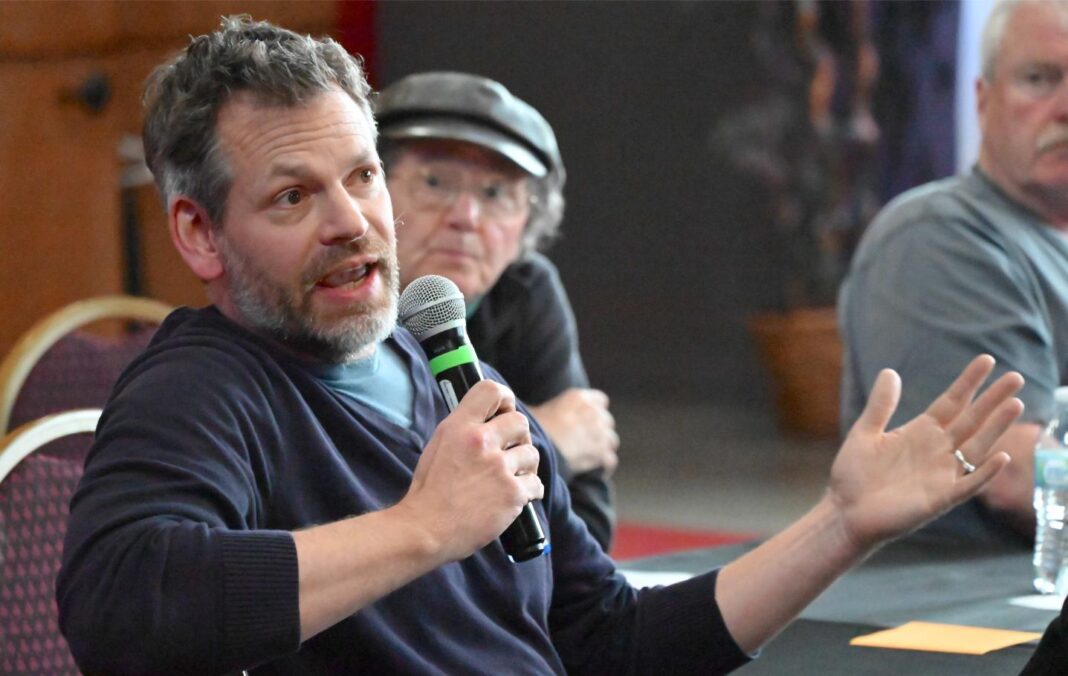
LINCOLN CITY — A revolutionary plan by the University of Oregon school of journalism to resuscitate or replace dead and dying “legacy” news outlets with philanthropic and taxpayer backing unfolded across Lincoln County last weekend.
In two meetings plus a movie premier held Feb. 28-Mar. 1 in Newport and Lincoln City, about 100 “thought leaders” heard media professor Andrew DeVigal make the case for a new journalism, one that abandons conventional free-market funding through advertising and paywalls for wealthy donors and government “interventions” to prop beleaguered local news efforts.
Taking stock of “news deserts” in Oregon, DeVigal had previously convened “listening sessions” in Florence, Oakridge, LaPine, Hermiston and the Rogue Valley, accompanied by students from his Agora Journalism Center and a few Oregon Public Broadcasting employees. He came to Lincoln County at the urging of Yachats journalist Quinton Smith.

The idea of governments or rich patrons bankrolling the news would have outraged earlier generations of journalists, but recent J-school graduates lack the frill of indignation. Once the backbone of civic life, newspapers large and small from the Denver (Colo.) Post to the Oakridge (Ore.) Dead Mt. Echo are dead as Latin. Radio stations that reliably aired school events and emergency bulletins have also pulled the plug, including a five-station Lincoln Co. broadcaster that closed in 2024.
A study by Northwest University found that roughly 2,500 newspapers have shut down since 2005 and are closing at a rate of 130 per year with only 1,000 daily papers remaining. Reasons cited are the migration of ads to digital platforms, loss of subscribers and high operating costs. As a result, journalism jobs have fallen by nearly 35% since 2002, including 6,900 positions between Dec. 2024 and late 2025.
Dave Price, a community college VP and former newspaper publisher who escorted his mother, Lil, to the Lincoln City event, rued the blow to journalism careers with the closing of his 97-year-old hometown paper, the News-Guard.
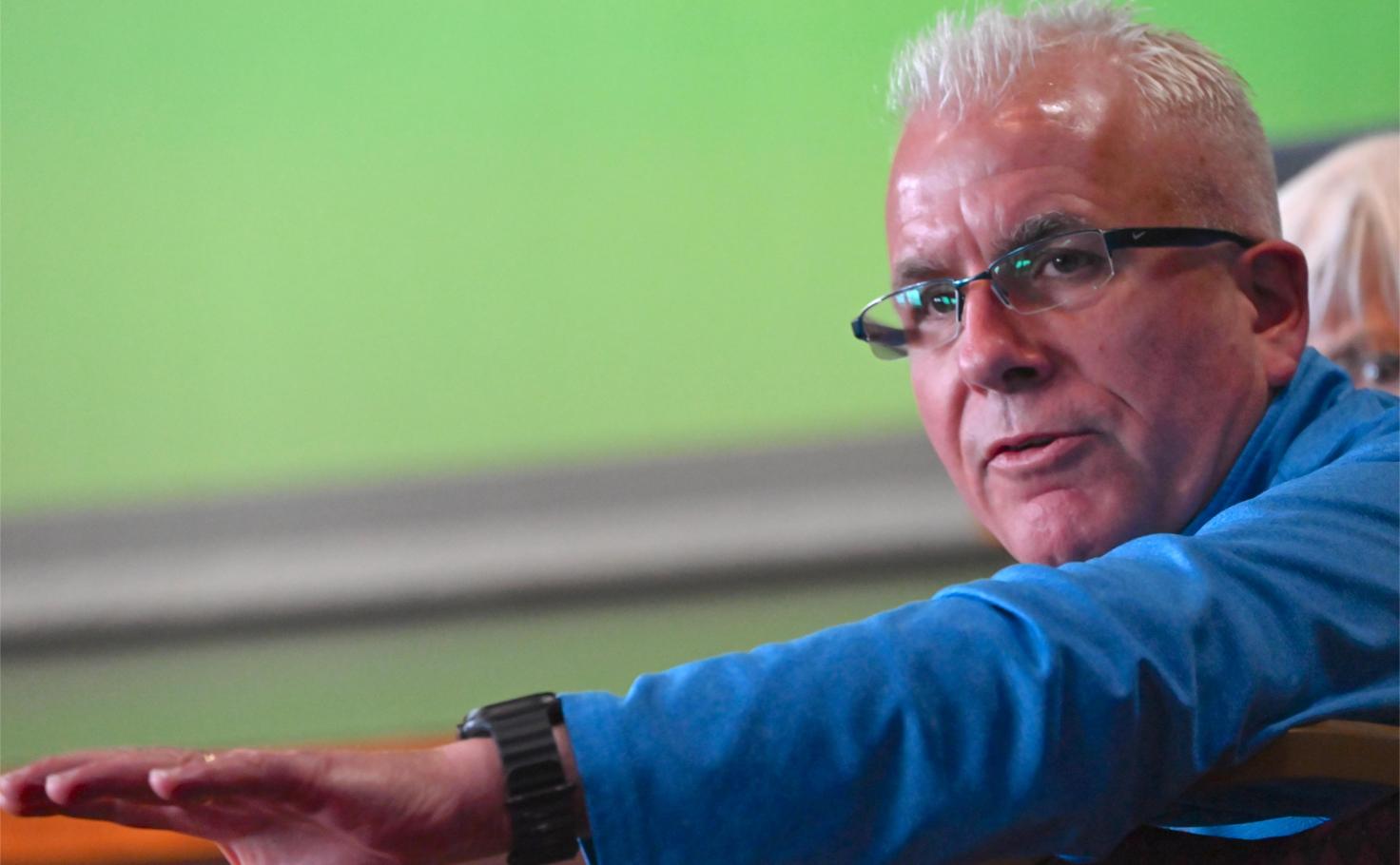
“When I got there in 1996, we had 18 employees,” Price recalled of the 28-page weekly, which merged into the one-reporter Lincoln County Leader in Jan. 2024.
In a survey of more than 800 Lincoln Co. residents, fewer than 10 percent read a newspaper, turning instead to Facebook, YouTube or even word of mouth to get their local news. While the results mirror national statistics, they were based “mostly on Democrats” who responded to the news site Lincoln Chronicle or high school students pressed into the study, noted DeVigal.
“People want to be informed and look to social media to fill the gap, but they’re reluctant to trust the quality,” said DeVigal, who cited an idea to have university-sponsored reporters in every county of the state. “We need money for more reporters. We need to think about reframing the news through philanthropists and other potential funders.”
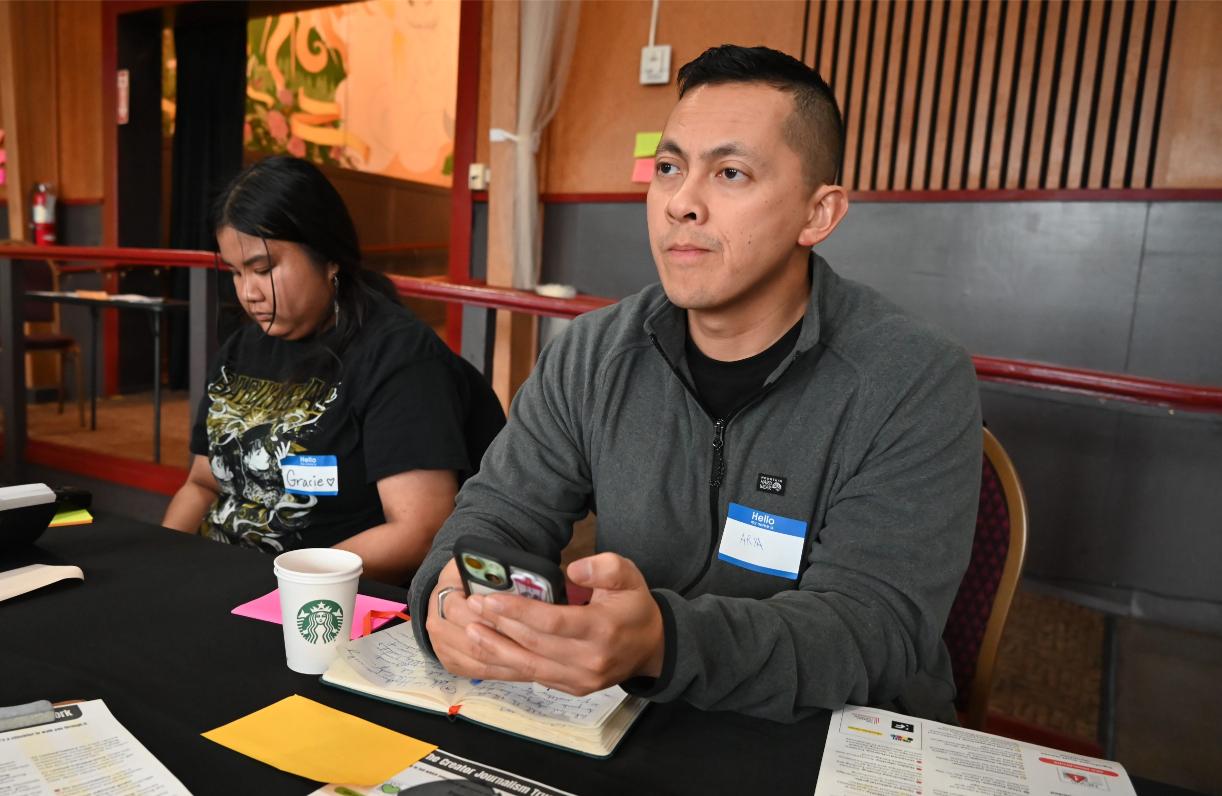
Seated around tables at the community center, participants went through exercises asking who they would turn to in an emergency, or how they would run a newsroom. Chamber executive Lori Arce Torres shook her head, saying journalists and social media were ineffectual during a fiery evacuation of the city. “We take care of each other in emergencies,” she stated.
Some attendees who naïvely figured a solution could be found in cheap newsprint went silent as Patrick Alexander, publisher of the weekly tabloid, Oregon Coast Today, explained that ink, paper and distribution alone cost $3,000-plus per issue, not including salaries and other business costs.
City councilor Marci Baker said the event narrowed her focus to “how journalism intersects with civic life,” sometimes in damaging ways such as “polarizing news media” and the “unchecked lies” of social media. She felt there should be ways to “incentivize good news” but didn’t exactly warm to the university’s plan to stake reporters.
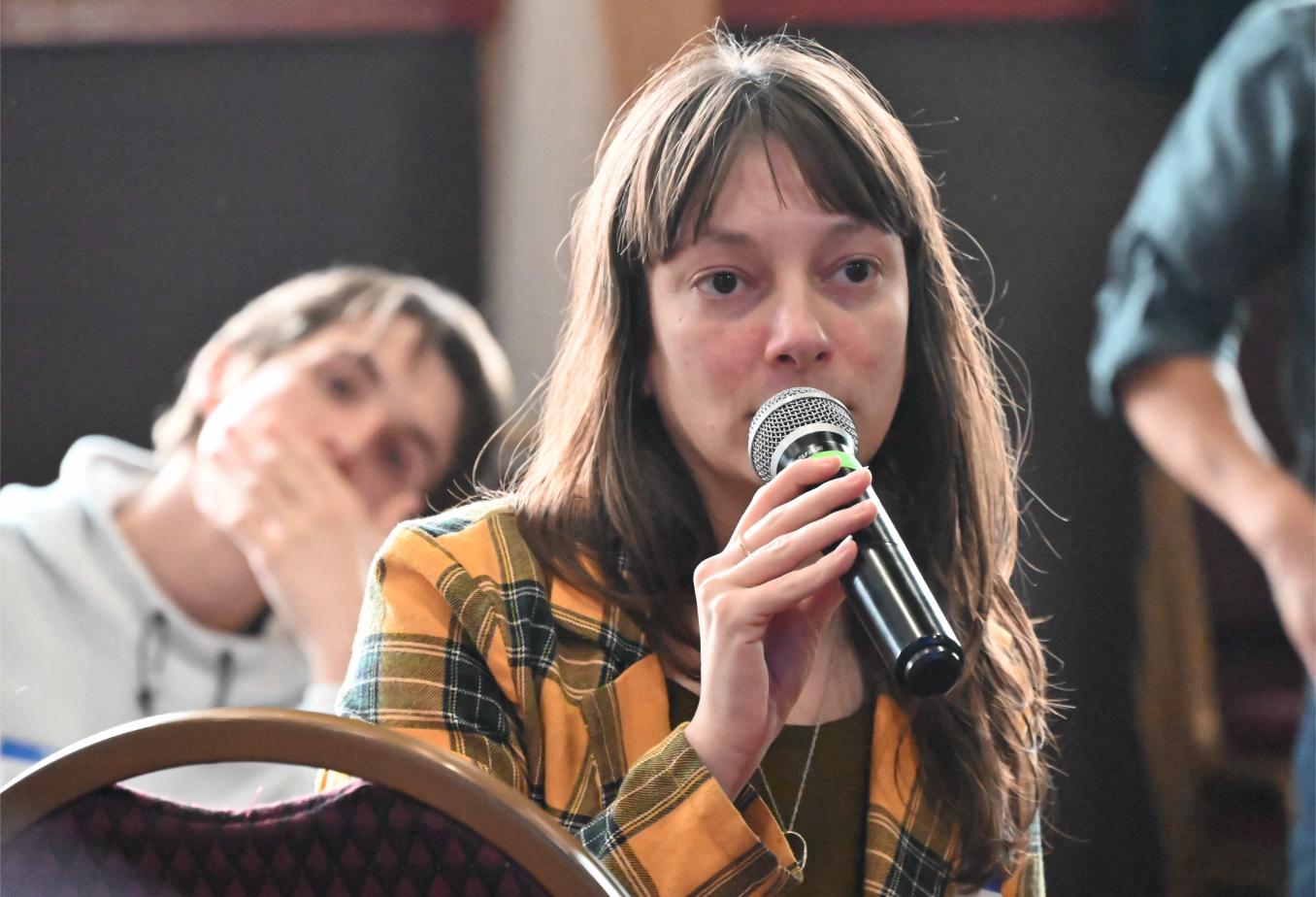
A question on making civic information work better turned heads, however. Participant Andrea Riner described a practical way to improve civic health called “Engage Lincoln City,” a promising effort to involve residents in municipal affairs that doesn’t involve faceless oligarchs or NGO-funded reporters.
The meeting inevitably veered left as one person decried Internet conspiracies and right-wing “rabbit holes,” while another seized the mic to call on migrant voices for their “stories of resilience.”
“I feel like Phil Donahue,” chuckled DeVigal as he moved to another table.
In the end, the U of O forum on the “future of journalism and civic health” probably raised more questions than it answered. For example, why do journalists blame hedge funds for the collapse of top-heavy battleships such as the Denver Post and not an avalanche of other factors, many self-imposed by journalists, themselves?
Or, who to blame for stagnant newspaper technology that forces publishers like Patrick Alexander to the wall every week? Does anybody in the rarified space of academia know we’re still using offset web presses designed in the early 1900s for a press-gang of 15 to operate?
Finally, do we need government’s help in fiercely-competitive Lincoln County, a hotbed of emerging journalism that includes a female-owned multi-media company, Oregon Coast Breaking News, the scrappy Boiler Bay Beacon, newcomer Toledo Tribune, the broadsheet Lincoln Co. Leader, the Pulitzer-rooted Lincoln Chronicle and a score of talented, self-publishing journalists on Facebook?
As Professor DeVigal retires to “conceptualize the data” collected in Lincoln County, he might consider the hopes of Keira Morgan, founder and familiar voice of Oregon Coast Breaking News on FM 100.7. While Morgan didn’t get an invitation to the event, she gave the topic some thought.
“What I could really use is an ad salesman,” she said.


