


 Boiler Bay Beacon

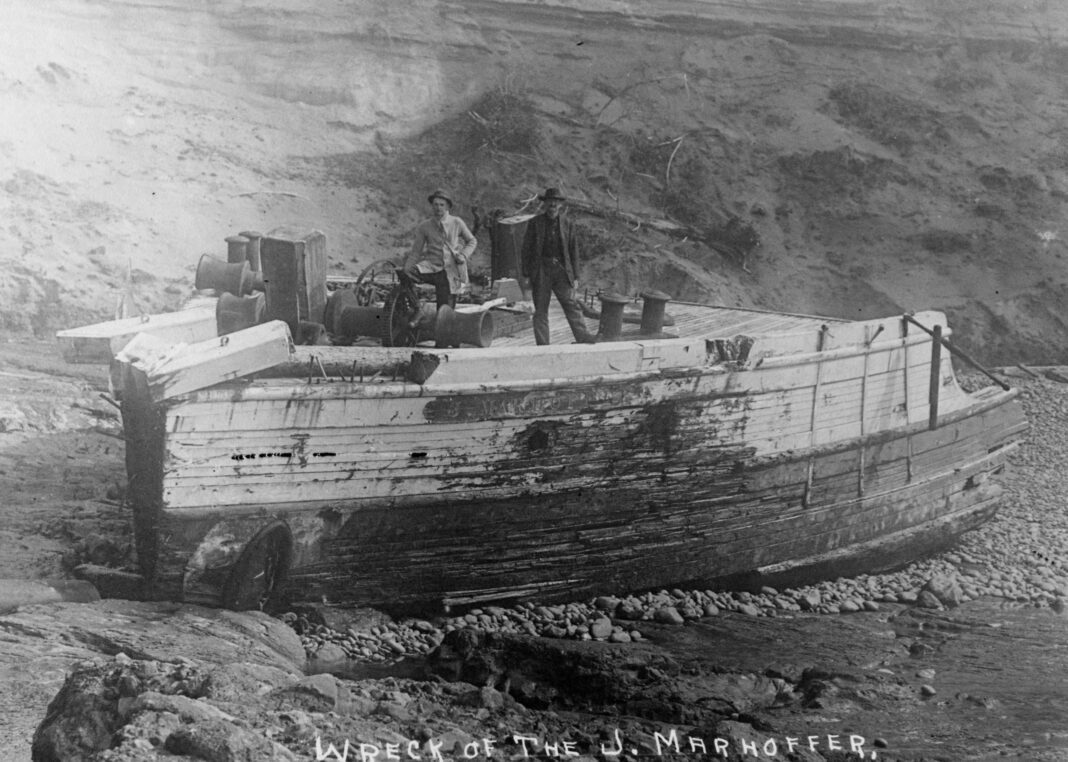
DEPOE BAY, Ore. — One of the most shocking sights at the Oregon coast occurs during ultra-low tides when the wreck of the J. Marhoffer is revealed!

“It’s astonishing to see this tragic piece of history in our back yard,” said Lincoln Co. resident Bruce Polvi after exploring the rugged location with his family and taking photos of the ship’s remains for the Beacon.
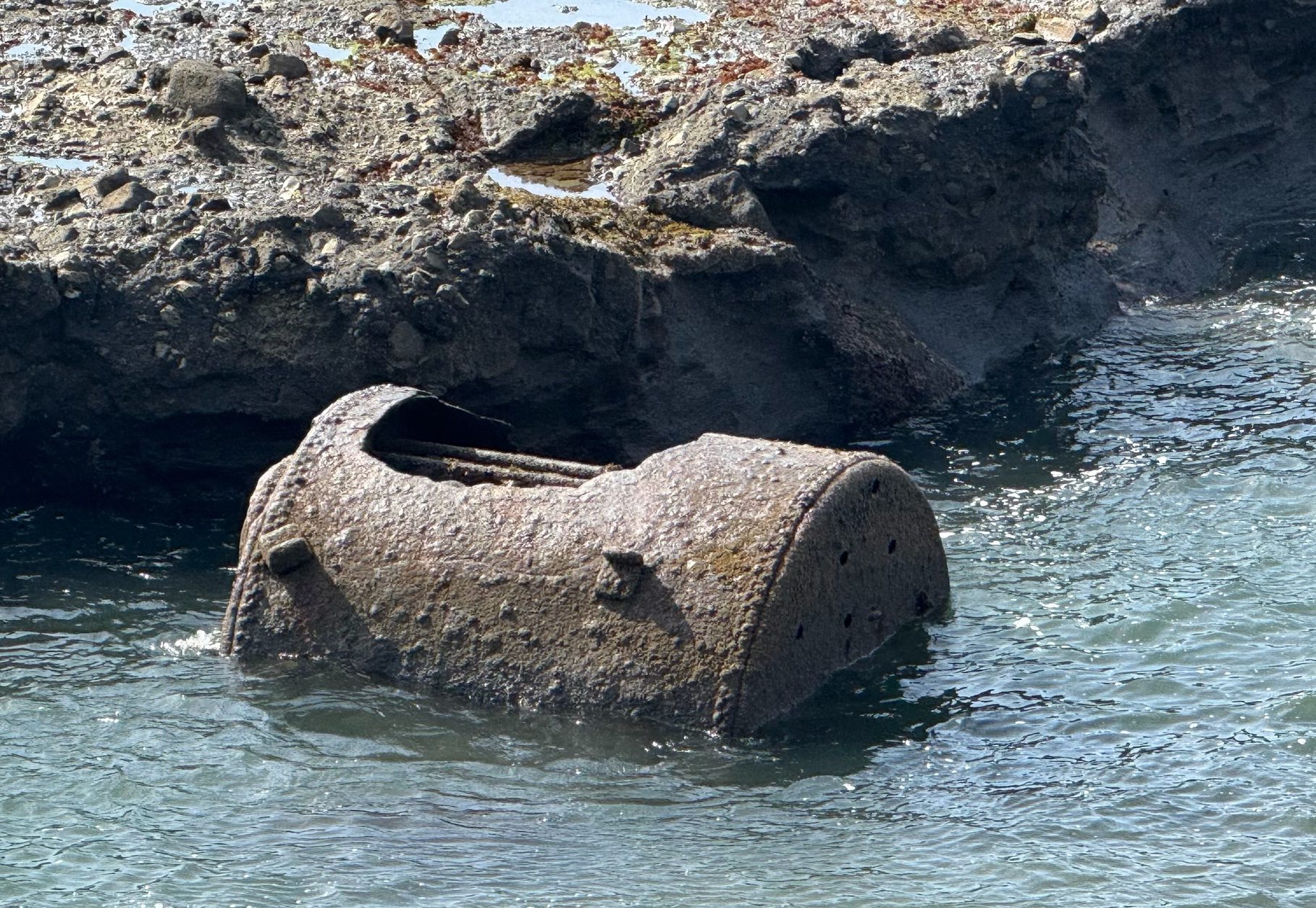
The shipwreck rusts away in Boiler Bay, a cove that takes its name from the massive boiler caught fast on a rocky shoal where the 174-foot coastal freighter ran aground on May 18, 1910. All that remains is the boiler and a steel shaft, though it has long been rumored a strong box full of company cash and passenger jewelry is anchored somewhere amid the rocks.
The J. Marhoffer was built at a cost of $85,000 in 1907 by the Lindstrom Shipbuilding Co. of Aberdeen, Wash., to carry lumber and passengers. Archives of the local historical society record how the 608-ton schooner was steaming north to Portland on smooth seas after off-loading its cargo in San Francisco. The hardscrabble pioneer village of Depoe Bay loomed three miles to starboard when disaster struck. The assistant engineer on boiler watch was experimenting with the ship’s new gas torch when it exploded and set the ship afire.
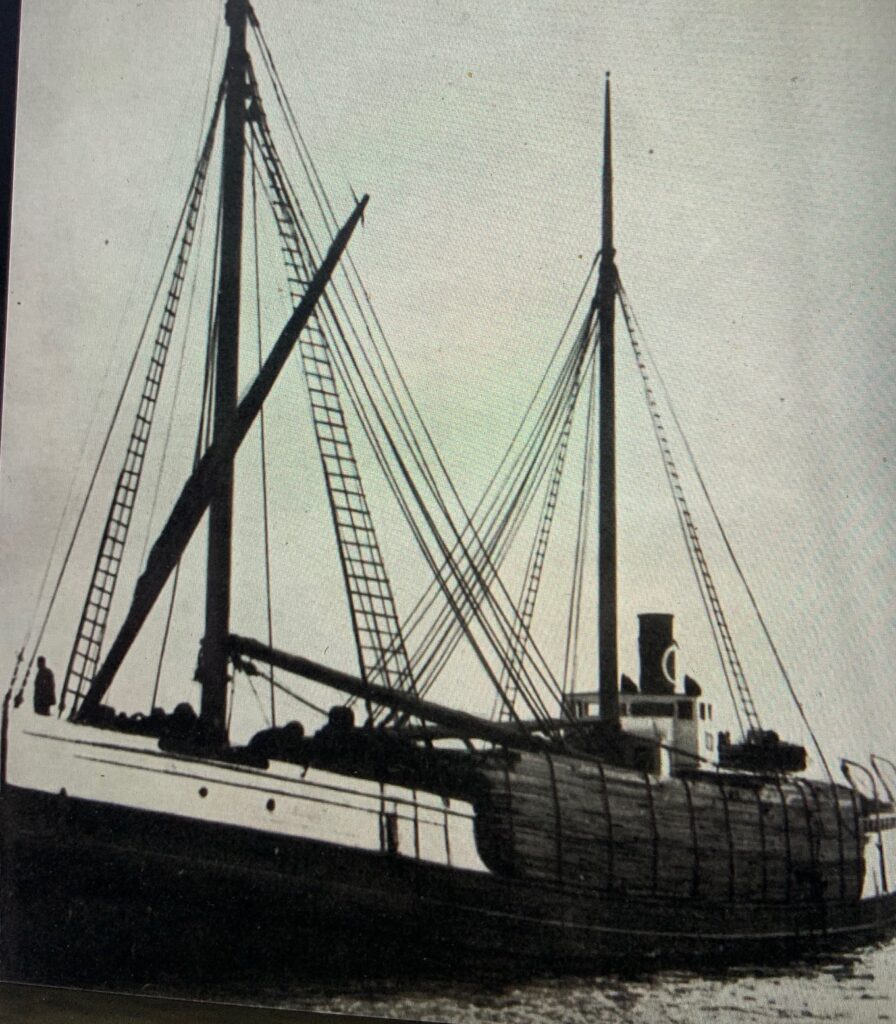
Captain Gustave Peterson drove the burning vessel toward shore then ordered the crew and passengers to abandon ship. Nineteen people entered two lifeboats while the J. Marhoffer continued to churn towards Brigg’s Landing, as Boiler Bay was originally known. One of the boats immediately swamped, but its occupants were pulled aboard the other lifeboat.
Pioneer families lined cliffs to witness the event, including young Anna Wisniewski who ran north to Fogarty Creek where she waved a red sweater to guide survivors to a safe beach landing. Instead, the lifeboats turned south and rowed to a landing at Whale Cove believing the red sweater signaled danger. All survived the harrowing ordeal but for the badly burned ship’s cook.
While hardy tourists trekked to the shipwreck when there were no roads in the area, today it’s just steps from Hwy. 101. Nearby Boiler Bay State Wayside has parking, restrooms and panoramic views of the wreckage site. At another highway pullout, the steep trail to the cove offers handholds for sure-footed explorers. The ebb tide exposes other things normally unseen: rocky marine gardens, colorful seascapes and ancient ice-age forests swamped by prehistoric tsunamis.
At the end of your journey, head one-half mile south to Depoe Bay, a quaint fishing village of 1,600 souls with a highly-rated brewery, intriguing boardwalk shops and Boiler Bay Beacon 4-star restaurants!


