


 Boiler Bay Beacon


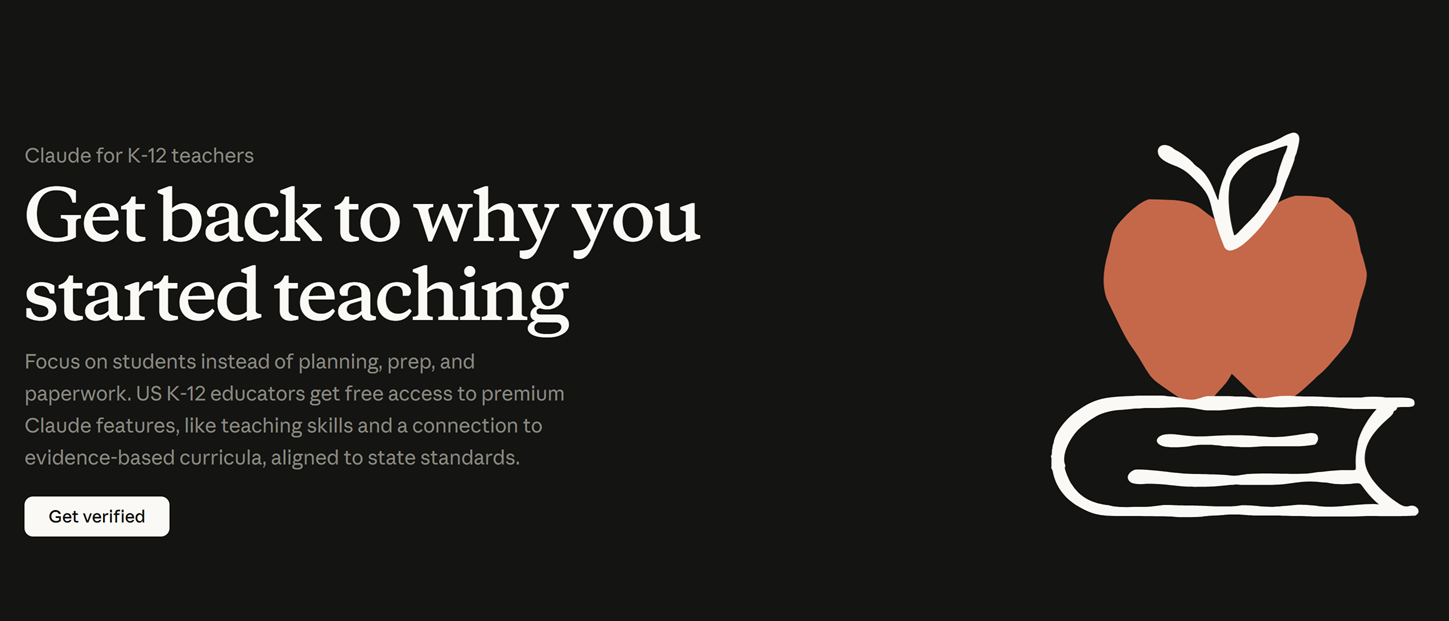
San Francisco-based AI company Anthropic announced Tuesday it’s giving verified K-12 teachers across the United States free access to Claude, its premium AI assistant, specifically tailored for classroom use.
The announcement comes as AI tools increasingly move into education, with Microsoft and Google already offering similar products in schools nationwide.
According to the company, Claude for Teachers helps educators “get back to why you started teaching” by handling administrative tasks like lesson planning so instructors can focus on students. The tool offers five main capabilities: creating lesson plans, tailoring instruction to different learning styles, checking student understanding, communicating with families and predicting where students might struggle.
The platform integrates with existing curriculum resources including Learning Commons, Illustrative Mathematics and OpenSciEd, automatically pulling in state standards across all 50 states without requiring teachers to manually input each requirement.
On the company’s website, Anthropic displays a live demonstration of the tool in action. A seventh-grade math teacher prompts Claude to create a 45-minute lesson on solving two-step equations using Illustrative Math materials. The AI produces a complete package including a warm-up activity, worked examples showing how to subtract and divide both sides of equations, partner practice problems and an exit ticket with success criteria.
Lincoln County School District teachers could use Claude to generate lessons connecting local beach erosion to environmental science standards. A Taft High educator might have the AI create a civics unit that references district board meetings and community issues happening right in their town. The tool lets teachers weave coastal geography, maritime history and local ecology into units without spending extra prep time.
Anthropic is also offering free “AI Fluency” courses co-created with Teach for America, along with a train-the-trainer module from the American Federation of Teachers. These model-agnostic courses teach educators which classroom tasks AI can help with and how to use it responsibly around students.
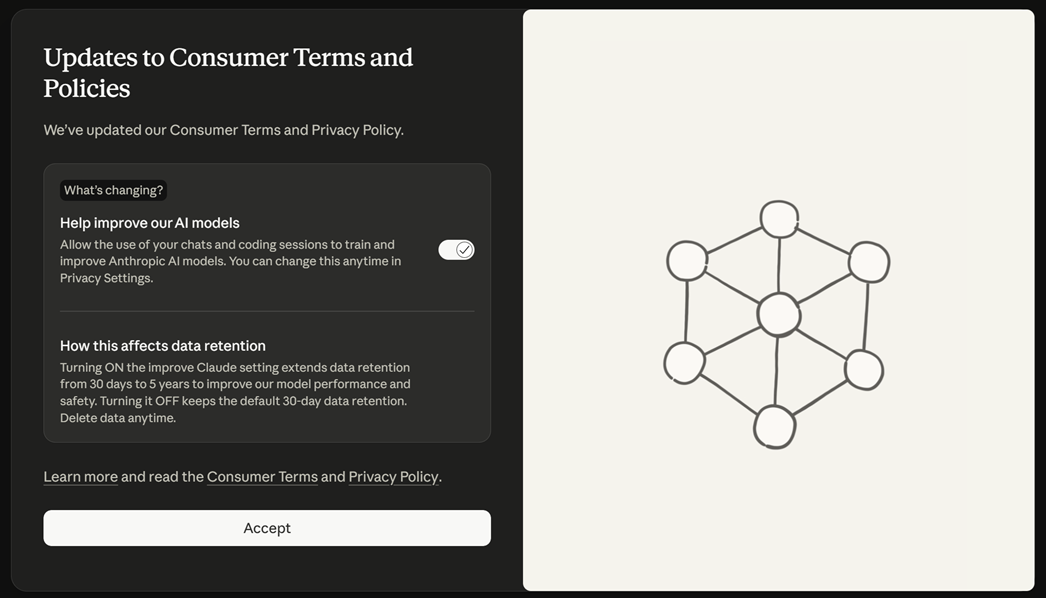
To use Claude for Teachers, instructors must complete a verification process on Anthropic’s website and sign up with their school email. The company offers the service free to all verified U.S. K-12 educators without appearing to charge licensing fees. A concerning observation upon creating an account was Anthropic asking for help improving their AI models. A toggle was set to a default of five years data retention, but unselecting the toggle kept the “default” 30-day data retention.
The landing page includes a section titled “Safe with student data” that says AI training is off by default for every verified educator account, with a way for deleting conversations containing student data. The platform is “built with FERPA in mind” according to the company, and follows the privacy standard set by the American Federation of Teachers for student data protection.
Questions remain about where exactly student-generated content gets stored and whether Anthropic has shared specifics with school boards or district administrators beyond what appears on their public website.
The announcement marks another expansion of major AI companies into K-12 education, joining competitors like Microsoft’s Einstein MC2 and Google’s Gemini Education that have already entered the space.


