


 Boiler Bay Beacon

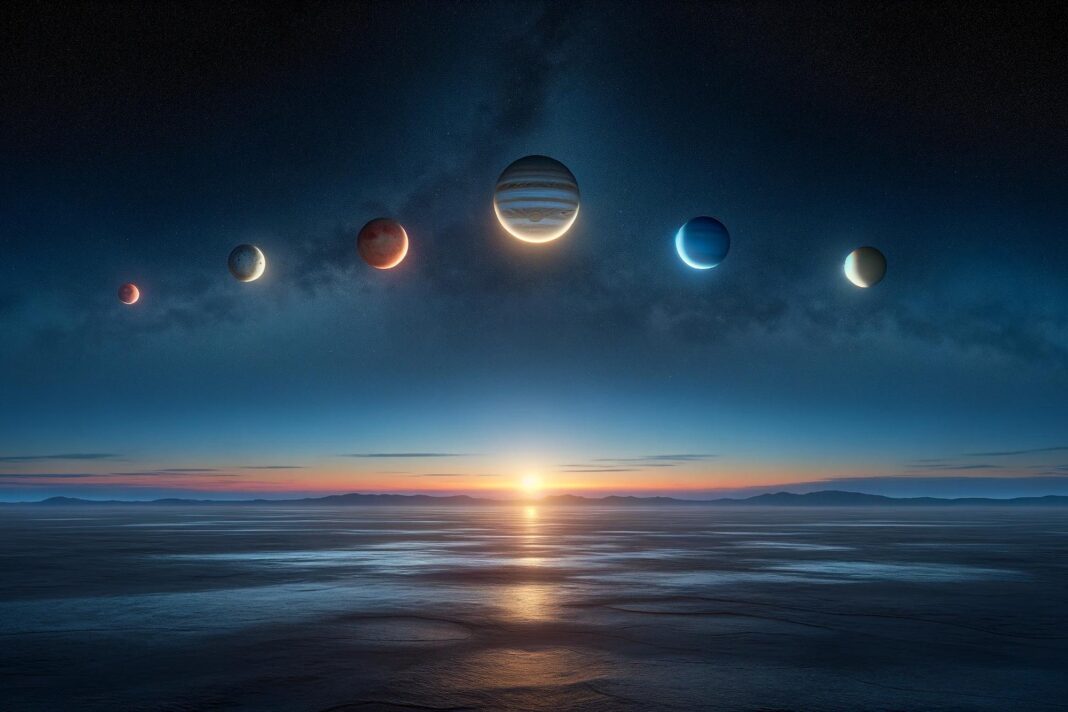
Skywatchers along the Oregon Coast will have a front-row seat to a celestial spectacle this Saturday, February 28, as six planets align in the evening sky shortly after sunset.
Mercury, Venus, Jupiter, Saturn, Uranus, and Neptune will appear to form an arc across the horizon, offering a rare opportunity for local residents to witness a “planetary parade” without leaving the county.
Loading poll…
The alignment, peaking around 30 to 60 minutes after local sunset (approximately 6:15 p.m. in Lincoln City) occurs when these planets are positioned on the same side of the Sun as Earth, making them visible in a relatively straight line from our vantage point. According to NASA, four of the planets (Venus, Jupiter, Saturn, and potentially Mercury) can be spotted with the naked eye under clear conditions, while Uranus and Neptune will require binoculars or a telescope to see. Venus will shine brightest low in the west, with Mercury nearby but often trickier to locate due to its proximity to the horizon. Jupiter will dominate the southeast, appearing as a brilliant point of light, while Saturn sits higher in the sky.
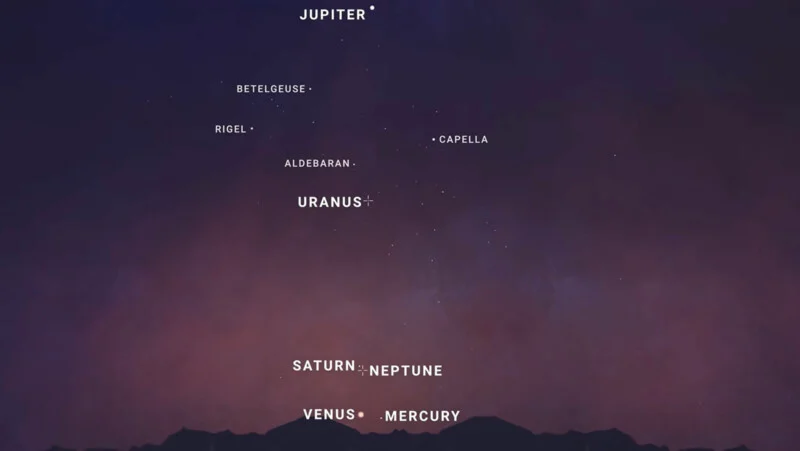
This event marks one of the more notable alignments of 2026, though not all planets in our solar system will participate. Mars, for instance, remains out of view this time. Similar parades have drawn attention in recent years, but experts note that this configuration provides a particularly wide span across the sky, visible for several days before and after the peak date if weather cooperates. The Planetary Society highlights that such multi-planet lineups, while not astronomically rare, offer educational value for understanding orbital mechanics and our place in the cosmos.

For Lincoln County observers, prime viewing spots include open coastal areas like Boiler Bay State Scenic Viewpoint or the beaches north of Lincoln City, where minimal light pollution enhances visibility. Avoid areas with heavy tree cover or urban glow from nearby towns such as Depoe Bay or Newport. Local astronomy enthusiasts recommend arriving early to allow eyes to adjust to the darkening sky and using apps like Star Walk or SkySafari for precise planet identification.
Weather along the central Oregon Coast could play a key role, with forecasts calling for partly cloudy conditions this weekend. Fog or the marine layer, common in late February, may obscure lower-horizon views. Residents are advised to check updated forecasts and consider higher elevations like the pullouts along Highway 101 for better chances.
The next comparable alignment won’t occur until November 2026, featuring a smaller grouping of planets.


